A student workshop in Satkhira on building for floods
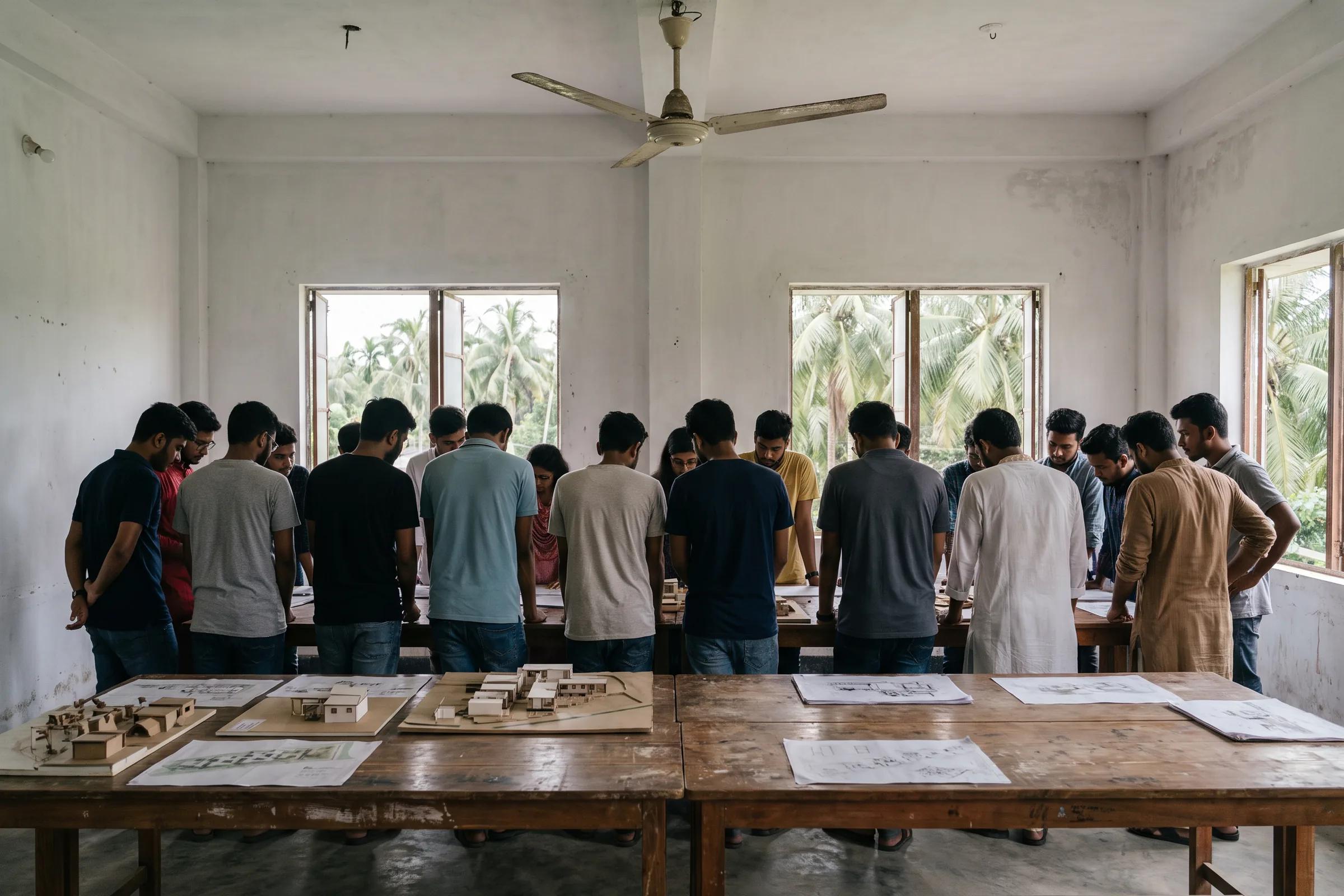
In July, twenty architecture students spent two weeks in Satkhira with the Coastal Shelter Design Lab and two of our architects. It was the first workshop under the agreement we signed with the lab in May.
Where we worked
We stayed in two villages on the Kholpetua river, where most homesteads are raised on earth plinths above the surrounding fields. Families repair the plinth every dry season, and it is the part of the homestead they look after most carefully.
What the students measured
Working in groups of four, the students surveyed thirty-two homesteads: plinth heights against the marks left by recent floods, wall and roof materials, and how water drains away from the yard.
Plinth heights
- Most plinths stood between 0.9 and 1.4 metres above the surrounding fields.
- Plinths faced with brick or covered in grass lost far less soil in the monsoon than bare earth.
- Where several households shared one raised yard, the plinth was higher and better kept.
Materials
Walls were mostly mud on a bamboo frame, with brick kept for plinth edges and kitchens. Several families had replaced thatch with corrugated iron and found the rooms much hotter, so the students tested simple ceiling linings of jute sacking and bamboo mats to take the heat off.
What happens next
The students are drawing up their measurements, and we will publish a short report with the lab later in the year. A second workshop is planned for the next dry season.